
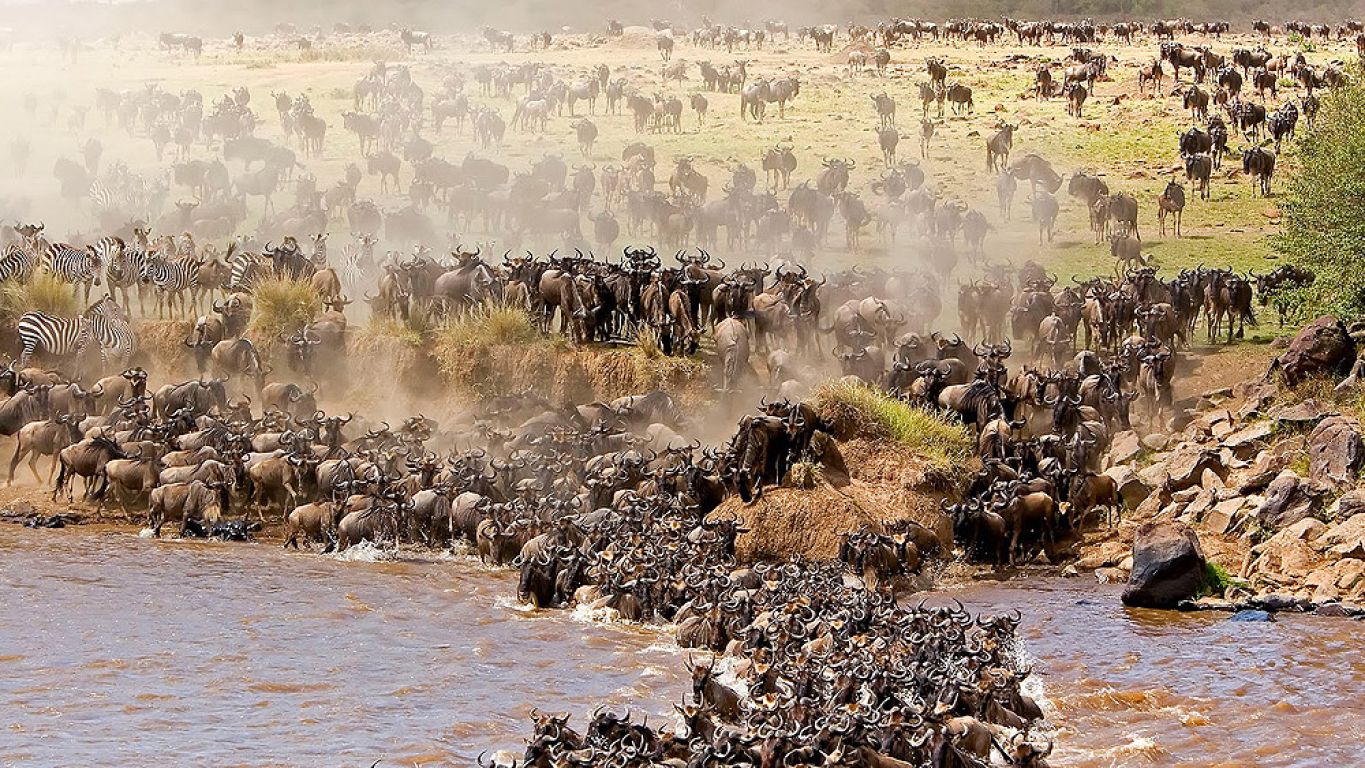
The Serengeti Great Migration is widely regarded as one of the most extraordinary wildlife spectacles on Earth. Every year, more than 1.5 million wildebeest, accompanied by hundreds of thousands of zebras and gazelles, travel across the vast Serengeti–Mara ecosystem in an endless cycle of survival. Their journey is driven by the search for fresh grazing lands and water, following seasonal rains across the plains of northern Tanzania and southern Kenya.
For travelers planning a Serengeti safari, witnessing this incredible wildlife movement is often the highlight of their trip. The migration is not simply a journey from one location to another but a continuous cycle that includes dramatic river crossings, predator encounters, and the birth of thousands of animals. Because the animals move throughout the year, different seasons provide unique opportunities to experience different stages of this natural wonder.
In this comprehensive guide, Incredible Africa Adventures explains the best time to see the Great Migration in Serengeti, where to find the herds during different months, and how to plan the perfect Tanzania safari.
The Serengeti Great Migration is a circular movement of wildlife through the Serengeti ecosystem, covering parts of northern Tanzania and Kenya’s Maasai Mara. The migration follows a predictable seasonal pattern, although exact timing can vary slightly depending on rainfall patterns and grazing conditions.
Unlike many wildlife events that happen in a single place at a specific time, the migration is a year-round phenomenon. Herds move continuously across the Serengeti plains, spreading across different regions as they search for food and water.
This incredible wildlife movement supports one of the most balanced ecosystems on the planet. Predators such as lions, cheetahs, leopards, hyenas, and crocodiles rely on the migration as a primary food source, creating dramatic wildlife interactions that make the Serengeti one of the greatest safari destinations in Africa.
The Great Wildebeest Migration is a continuous journey that unfolds throughout the year across the Serengeti ecosystem. While the movement of the herds depends on rainfall and grazing conditions, the general migration pattern follows a predictable seasonal cycle.
Understanding where the herds are located during each month helps travelers plan the best time to visit Serengeti National Park and experience one of the greatest wildlife spectacles on Earth.
From January to March, the Great Migration concentrates in the southern Serengeti and Ndutu plains, where the calving season takes place. During this period, hundreds of thousands of wildebeest calves are born within a short time frame.
The vast open grasslands provide nutrient-rich grazing that supports mothers and newborn animals. This abundance of young wildlife attracts predators, creating dramatic scenes as lions, cheetahs, and hyenas hunt across the plains.
For safari enthusiasts and photographers, the calving season offers extraordinary opportunities to witness both the beauty and intensity of the Serengeti ecosystem.
During April and May, the Serengeti experiences its long rainy season. Although some travelers avoid this period due to rainfall, it offers a unique safari experience.
The landscape becomes lush and vibrant, wildlife remains abundant, and visitor numbers are significantly lower. Large herds continue moving gradually through the central Serengeti as they begin their journey northward.
Travelers who visit during this period often enjoy a more peaceful safari experience with fewer vehicles and dramatic green landscapes that are perfect for photography.
As the rains fade and the dry season begins, the herds migrate toward the western Serengeti corridor. During June and July, animals begin crossing the Grumeti River, where crocodiles lurk beneath the surface waiting for opportunities.
Although these crossings are less famous than the Mara River crossings later in the year, they still provide thrilling wildlife encounters. This stage of the migration marks the beginning of Tanzania’s peak safari season.
The most dramatic phase of the migration occurs between July and October, when massive herds reach the northern Serengeti near the Mara River.
Thousands of wildebeest gather along the riverbanks before attempting to cross the powerful current. As the animals leap into the water, crocodiles lie in wait, while predators patrol the nearby plains.
These river crossings are unpredictable and intense, making them one of the most sought-after wildlife experiences in Africa. This period is widely considered the best time to visit Serengeti National Park for the Great Migration.
When the short rains begin in November, the migration gradually moves back toward the southern Serengeti plains. By December, the herds spread across the central and southern regions of the park as they prepare for the next calving season.
While dramatic river crossings are less common during this period, travelers can still observe large herds moving across the plains in spectacular formations.
Because the exact movement of the Great Migration depends on rainfall and grazing conditions, the location of the herds can vary slightly each year. Experienced safari guides closely monitor wildlife movements to ensure travelers are positioned in the best areas of Serengeti National Park to witness this incredible natural phenomenon.
Because the migration moves throughout the Serengeti ecosystem, choosing the right safari location depends on the time of year.
An experienced safari guide can track the migration and position travelers in the best locations to witness the most dramatic wildlife moments.
Although the Great Migration is the Serengeti’s most famous event, the park offers incredible wildlife viewing throughout the year.
Serengeti National Park is home to the Big Five — lions, elephants, buffalo, leopards, and rhinos — along with cheetahs, giraffes, hyenas, hippos, crocodiles, and more than 500 species of birds. The park’s vast landscapes, golden plains, and spectacular sunsets make every safari unforgettable, even when the migration herds are in another region.
The dry season from June to October is generally considered the best time for wildlife viewing, as animals gather around rivers and waterholes.
However, the green season from November to May offers lush landscapes, fewer tourists, and excellent birdwatching opportunities. Each season provides its own unique safari experience.
Planning a Serengeti migration safari requires careful timing and expert guidance. Because the animals move continuously, travelers should allow enough time to explore multiple regions of the park.
Many safari itineraries include 5 to 7 days in the Serengeti ecosystem, allowing visitors to track the migration and enjoy diverse wildlife experiences. Combining Serengeti with nearby destinations such as Ngorongoro Crater, Tarangire National Park, and Lake Manyara creates a complete Northern Tanzania safari adventure.
The Serengeti Great Migration takes place throughout the year, but the most dramatic moments occur between July and October, when massive herds cross the Mara River in northern Serengeti. Another remarkable period occurs between January and March, when thousands of wildebeest calves are born on the southern Serengeti plains. Each season provides unique opportunities to witness different stages of the migration.
The best location depends on the time of year. Southern Serengeti is ideal for calving season, western Serengeti for early river crossings, and northern Serengeti for the famous Mara River crossings. Because the herds move continuously, traveling with experienced safari guides ensures the best viewing opportunities.
The Serengeti Great Migration involves approximately 1.5 million wildebeest, along with hundreds of thousands of zebras and gazelles. This enormous movement of animals forms one of the largest wildlife migrations on Earth and plays a crucial role in maintaining the Serengeti ecosystem.
Absolutely. Serengeti National Park offers exceptional wildlife viewing year-round. Even when the migration is not present in a specific region, visitors can still observe lions, elephants, cheetahs, giraffes, and many other animals across the park’s vast landscapes.
How long should a Serengeti safari be?
Most travelers spend 5–7 days exploring the Serengeti ecosystem to maximize their chances of seeing the migration and experiencing different regions of the park. Many itineraries combine Serengeti with Ngorongoro Crater and Tarangire National Park for a complete Tanzania safari experience.
Witnessing the Serengeti Great Migration is truly a once-in-a-lifetime experience. From dramatic river crossings to the birth of thousands of wildebeest calves, every stage of the migration reveals the raw beauty of Africa’s wilderness.
At Incredible Africa Adventures, we specialize in creating expertly guided Tanzania safaris that position travelers in the best locations to experience the migration. Our experienced guides, comfortable safari vehicles, and carefully designed itineraries ensure that every moment of your journey through Tanzania becomes unforgettable. Start planning your Serengeti adventure today and discover the magic of Africa’s most iconic wildlife destination.
Drop us a line. Our tour experts will answer all your questions shortly