
Climbing Mount Kilimanjaro, the highest mountain in Africa at 5,895 meters (19,341 feet), is an extraordinary adventure that requires proper preparation, physical endurance, and excellent nutrition. While many climbers focus on training and gear, the quality of food and hydration during the trek is equally important for summit success.
At Incredible Africa Adventures, we believe that nourishing meals are essential for maintaining energy, supporting acclimatization, and ensuring a comfortable trekking experience. Our carefully designed Kilimanjaro meal plan provides balanced nutrition, fresh ingredients, and satisfying meals prepared by experienced mountain chefs.
Throughout your trek, you will enjoy a variety of delicious dishes designed to provide the carbohydrates, proteins, vitamins, and hydration necessary to sustain your body during this remarkable journey to the Roof of Africa.
During a Mount Kilimanjaro trek, climbers burn thousands of calories each day while hiking at high altitude. To meet these energy demands, our meals are carefully prepared to provide high-energy, nutritious, and easily digestible food.
Our Kilimanjaro meals emphasize high-carbohydrate foods, moderate protein, and fresh fruits and vegetables to maintain energy levels and support acclimatization.
Every meal is freshly prepared by professional mountain cooks using high-quality ingredients transported up the mountain by our experienced porter team.
Unlike many trekking destinations where dehydrated meals are common, we prioritize fresh ingredients whenever possible, ensuring climbers enjoy healthy and satisfying food throughout the expedition.
We understand that every climber has unique dietary needs and preferences. Before your Kilimanjaro expedition begins, we ask all climbers to share any dietary restrictions or preferences so that our chefs can prepare suitable meals.
We regularly accommodate climbers with special diets, including:
Our team takes great care to ensure that every climber receives nutritious meals tailored to their dietary needs while maintaining the energy requirements necessary for a successful Kilimanjaro climb.
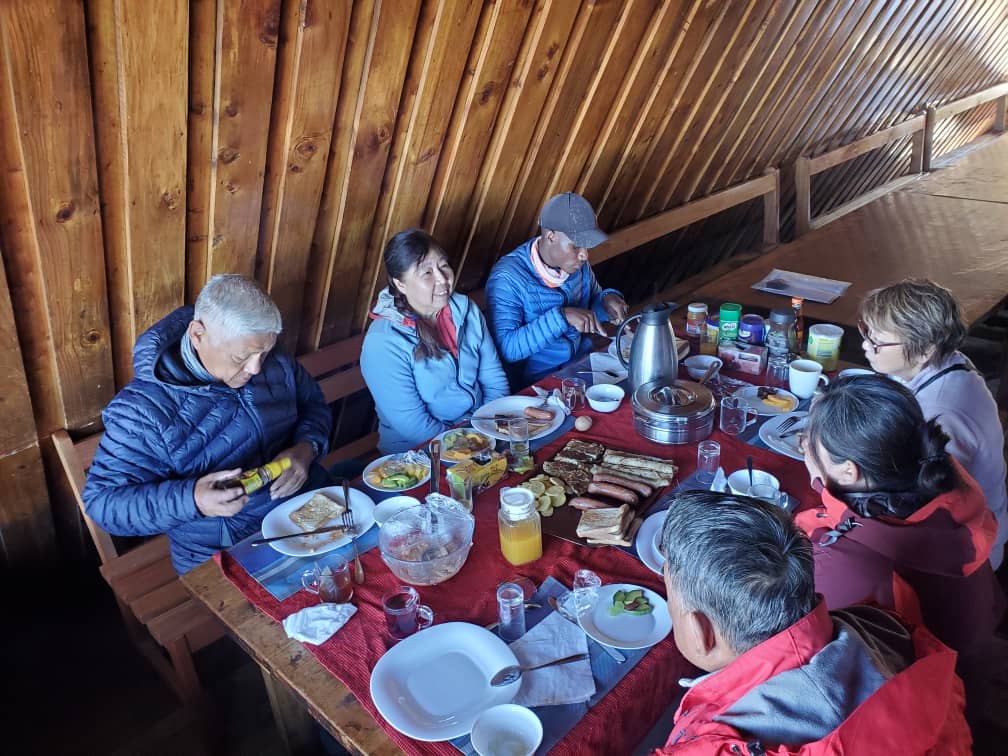
A typical day on Mount Kilimanjaro includes three main meals and additional snacks to maintain energy throughout the trek.
Breakfast is designed to provide a strong start to the day before trekking begins.
Typical breakfast options include:
These meals provide a combination of carbohydrates and protein to sustain climbers during the morning hike.
During trekking breaks, climbers receive light snacks to maintain energy between meals.
Common snacks include:
These snacks help replenish energy while trekking through Kilimanjaro’s different ecological zones.
Lunch is usually served at a scenic rest point along the trail or at camp after the morning hike.
Typical lunch meals include:
Lunch meals provide balanced nutrition while remaining light enough to allow comfortable hiking during the afternoon.
Dinner is the most substantial meal of the day and helps climbers recover from the physical effort of trekking.
A typical Kilimanjaro dinner includes:
Starter: Soup of the day served with bread
Main Course:
Dessert: Fruit salad, cake, or custard
Hot Drinks: Tea, coffee, or hot chocolate
Dinner is usually served in the mess tent, where climbers gather to relax, warm up, and share stories from the day’s trek.
Summit night on Kilimanjaro is the most physically demanding part of the climb. Because climbers begin the ascent around midnight, special snacks and warm drinks are provided to help maintain energy and morale.
Typical summit snacks include:
These light but energy-rich foods provide the boost needed for the final push to Uhuru Peak.
Nutrition plays a vital role in altitude performance, and carbohydrates are especially important during high-altitude trekking.
Carbohydrates provide the body with efficient energy that requires less oxygen to metabolize, making them ideal for environments where oxygen levels are reduced.
A high-carbohydrate diet during the Kilimanjaro climb helps to:
For this reason, many Kilimanjaro meal plans prioritize foods such as rice, pasta, potatoes, bread, and grains.
Staying hydrated is just as important as eating properly during a Kilimanjaro trek.
At high altitude, the body loses fluids more quickly due to increased breathing and physical exertion. Climbers are encouraged to drink at least 3 to 4 liters of water per day to stay properly hydrated.
Our mountain crew provides purified drinking water throughout the trek to ensure safety and convenience. Maintaining proper hydration helps prevent fatigue, supports acclimatization, and reduces the risk of altitude sickness.
Meals on Kilimanjaro are served in comfortable weatherproof dining tents that provide protection from wind, rain, and cold temperatures.
The dining tent becomes a social gathering place where climbers can relax, enjoy warm meals, and share experiences with fellow adventurers.
On clear days, meals may also be enjoyed outdoors while admiring the breathtaking scenery of the mountain’s landscapes.
Yes. Our professional mountain chefs prepare fresh and nutritious meals designed to provide the energy needed for high-altitude trekking.
Absolutely. Vegetarian and vegan meal plans can easily be arranged and are commonly provided on Kilimanjaro climbs.
Climbers and our mountain crew typically receive three main meals per day plus snacks and hot drinks throughout the trek.
Yes. Water is purified by the mountain crew before being provided to climbers.
At Incredible Africa Adventures, we understand that a successful Kilimanjaro climb depends on more than just reaching the summit. Comfort, safety, and nourishment are all essential parts of the journey.
Our Kilimanjaro expeditions include:
Our goal is to ensure every climber remains energized, healthy, and motivated throughout the journey to Uhuru Peak.
Climbing Mount Kilimanjaro is one of the greatest adventures on Earth. With the right preparation, expert guides, and nutritious meals, the journey becomes even more enjoyable and rewarding.
Join Incredible Africa Adventures and experience a Kilimanjaro expedition where every detail — from meals to safety — is carefully designed to support your success on the Roof of Africa. Contact us today to begin planning your unforgettable Kilimanjaro climb.
Drop us a line. Our tour experts will answer all your questions shortly